
WhatTheWordSays | Bible Study South Africa | Prayer | Christian Devotional

Your cart

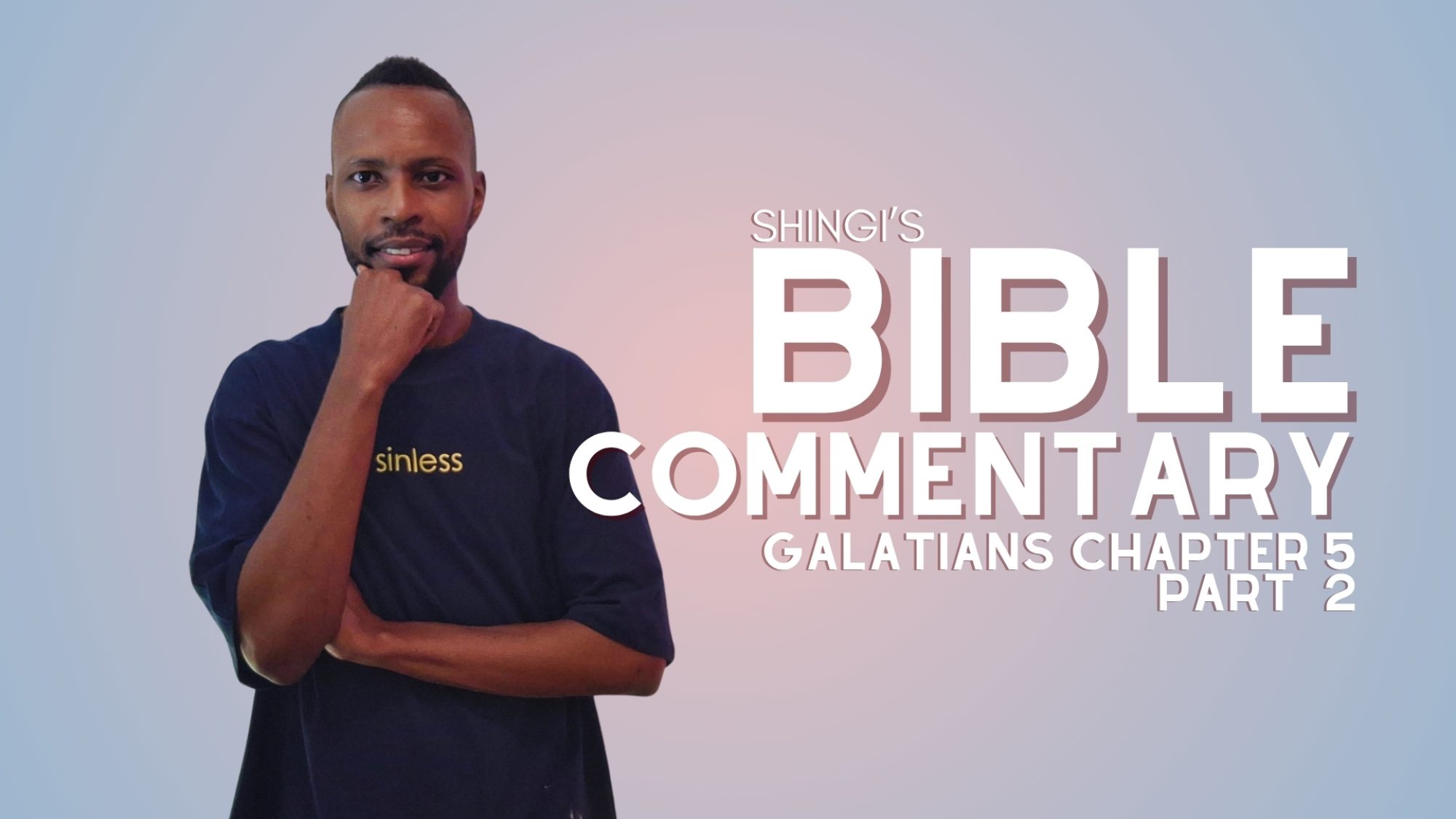
Shingi’s Bible Commentary Galatians Chapter 5 part 2

Shingi's Bible Commentary
Shingi's Bible Commentary Galatians Chapter 5 part 2
Loading
/

Study Guide
Galatians 5 part 2: The works of the flesh and the fruit of the spirit 

Hermeneutical Framework: Contextual and Cross-Scriptural Interpretation.
Accurately discerning Paul’s intended meaning for pneuma requires a deliberate interpretive method that moves beyond a surface-level reading. English translations, particularly older versions like the King James Version, often apply a capitalized “Spirit” broadly, which can obscure the specific agent Paul intended in a given context. To penetrate this translational veil, a more rigorous hermeneutic is required, one grounded in contextual analysis and the principle of allowing Scripture to illuminate itself.

 The foundational method that Shingi employs for this analysis, is the principle of “letting Scripture interpret Scripture”. This approach assumes a coherence within the biblical canon, wherein passages from different books can clarify and define terms used elsewhere. By comparing Paul’s use of pneuma in Galatians with his usage in texts like 1 Corinthians and Romans, a more precise theological vocabulary emerges. This prevents imposing a monolithic meaning on a term that Paul himself uses with fluid, context-dependent intention.

Spiritual understanding: Shingi’s interpretive process is aided by what he reveals to be an ability given by the Spirit of God as defined in the scriptures as “spiritual understanding”. This is the faculty, given by the Holy Spirit, that enables a child of God to perceive nuances in the text that translation alone may miss. According to Shingi’s exegesis, it is this spiritual insight that allows the reader to recognize when Paul uses pneuma interchangeably to refer to different subjects and to follow the logic of his argument from verse to verse.
To navigate Paul’s usage, it is helpful to recognize the different Greek phrases involving pneuma and their typical referents as outlined in the source:
Greek Phrase
Common Reference
pneuma theos (πνεῦμα θεός)
The “Spirit of God,” a clear reference to the divine Holy Spirit.
hagios pneuma (ἅγιος πνεῦμα)
The “Holy Spirit,” also a direct and unambiguous reference to God.
pneuma (πνεῦμα)
The standalone term for “spirit.” Its meaning must be determined by its immediate context. It can refer to the Spirit of God, the regenerated human spirit, or wind.

Case Study in Hermeneutics: The Searching “Spirit” of 1 Corinthians 2
Teacher Shingi’s case for this hermeneutical necessity is powerfully illustrated by a parallel exegesis of 1 Corinthians 2:9-12, which highlights a pattern of potential translation errors rooted in a failure to apply contextual analysis. The critique focuses on the King James Version’s rendering of 1 Corinthians 2:10, “for the Spirit searcheth all things, yea, the deep things of God,” where “Spirit” is capitalized.
Shingi dismantles this translation with the following logic:
Premise: The Holy Spirit is God. As God, He already knows the “deep things of God” and has no need to “search” for them. Shingi posits that the act of searching implies a lack of knowledge that is incompatible with divinity.
 Contextual Clue: Verse 11 provides the necessary distinction: “what man knoweth the things of a man, save the spirit of man which is in him? even so the things of God knoweth no man, but the Spirit of God.” Paul clearly separates the human spirit’s sphere of knowledge from the divine Spirit’s.
Conclusion: The argument hinges on the premise that the entity that needs to “search” the deep things of God is the small letter ‘s’ “spirit of a man,” who has been indwelt by the Holy Spirit. The regenerated human spirit is the searcher, and the Holy Spirit is the revealer.
This passage serves as the prime exhibit demonstrating that a uniform capitalization of pneuma can create theological inconsistencies. It validates the entire methodological approach of Shingi’s commentary before the analysis of Galatians even begins, proving that a contextual, cross-scriptural hermeneutic is not merely optional but essential for accurate Pauline exegesis.

Teacher Shingi synthesizes his core arguments and theological interpretations in his presentation. The central thesis is radical revelations of key passages based on a distinction between “Spirit” (capital letter ‘S’) referring to the Holy Spirit, and “spirit” (small letter ‘s’) referring to the recreated human spirit of a child of God. This distinction leads to several critical interpretations:

  1. The “Fruit of the Spirit” is Produced by the child of God: Shingi argues forcefully that the fruit listed in Galatians 5:22-23 (love, joy, peace, etc.) is the product of the Christians own recreated human spirit, not the Holy Spirit. Citing John 15, it posits that God is the “vine” and believers are the “branches”—the fruit-bearing part. God does not need to bear fruit; believers do.
  2. Spiritual Conflict is Internal to the child of God: The conflict described in Galatians 5:17 (“the flesh lusts against the spirit”) is not a struggle between human flesh and the Spirit of God. Rather, it is an internal tug-of-war between the Christian’s physical senses (“the voice of your flesh”) and their own recreated human spirit.
  3. “Works of the Flesh” Describe the Unsaved: By cross-referencing with Romans 8, Shingi asserts that born-again believers are “not in the flesh, but in the Spirit.” Consequently, the list of “works of the flesh” in Galatians 5:19-21 describes the nature and actions of those who are not in Christ, rather than a list of temptations for Christians.
  4. A Christian’s Identity is Rooted in a Crucified Flesh: The analysis emphasizes that for a believer in Christ, the flesh with its “affections and lusts” has already been crucified (Galatians 5:24). “Walking in the Spirit” is therefore an act of living in accordance with this established spiritual reality, which is revealed in the Word of God.
  5. Context and Spiritual Understanding are Key: The entire argument rests on a hermeneutic of “letting scripture interpret scripture” and relying on “spiritual understanding” to discern the correct contextual meaning of the Greek word pneuma (spirit), which, it is argued, has been incorrectly capitalized in key passages by translators of the King James Version.

1. Central Thesis: Distinguishing ‘Spirit’ (Capital letter ‘S’) from ‘spirit’ (Small letter ‘s’)

The foundational argument that Shingi presents is that the understanding of Galatians 5 hinges on correctly identifying which “spirit” is being discussed in each verse. This requires moving beyond the translators’ capitalization choices in versions like the KJV and using scriptural context to understand the author’s intent for the Greek word pneuma.

Spirit (Capital letter ‘S’): The Spirit of God

This refers to the Holy Spirit, the Spirit of God, or the Spirit of Christ (Hagios Pneuma or Pneuma Theos).

Phrases like “walk in the Spirit” (Gal. 5:16) and “if you be led of the Spirit” (Gal. 5:18) Shingi teaches to be referring to the Spirit of God.

“Walking in the Spirit” is defined as walking in accordance with the Word of God, as the scriptures are the “words of the Spirit.”
Praying “in the Spirit” (Ephesians 6:18) is similarly defined as praying in accordance with the Word, not just speaking in tongues.

spirit (Small letter ‘s’): The Recreated Human Spirit

This refers to the born-again spirit of a human being.
The commentary argues that this is the correct interpretation for passages describing an action or state internal to the believer, such as the struggle against the flesh and the bearing of fruit.

Scriptural support is drawn from 1 Corinthians 14:14-15, where Paul distinguishes his own praying spirit: “If I pray in an unknown tongue, my spirit prays… I will pray with the spirit.”

2. The Source of Fruit: Understanding ‘The Fruit of the Spirit’ (Galatians 5:22)

A major conclusion of this analysis is that the phrase “the fruit of the Spirit” is a mistranslation and should be understood as “the fruit of the (recreated human) spirit.”


Theological Rationale:
Teacher Shingi states, “God doesn’t need to bear fruit. We are the ones that need to bear fruit. Our recreated human spirit is the one that needs to bear fruit.” The Spirit of God, being God, is the source and essence, not a producer of fruit in this context.

Scriptural Evidence (John 15): The primary evidence is Jesus’s vine and branches analogy.
Jesus as the Vine: “I am the vine…” (John 15:1, 5). The Spirit of Christ is the vine, the source of life.
Believers as the Branches: “ye are the branches” (John 15:5). The branches are explicitly identified as the fruit-bearing part of the plant. “Every branch in me that beareth… fruit…” (John 15:2).

Since believers are the branches, they are the ones who produce the fruit. Therefore, the “fruit” described in Galatians 5 is the product of the believer’s own recreated spirit, which is connected to the vine (Christ).

3. The Nature of Spiritual Conflict (Galatians 5:17)

The commentary re-frames the classic interpretation of the spiritual war in Galatians 5:17: “For the flesh lusteth against the Spirit, and the Spirit against the flesh.”


The Flawed Comparison:
It is argued that comparing the “flesh” (human senses) to the omnipotent “Spirit of God” is an invalid comparison. The Spirit of God is not in competition with human flesh; Genesis 6:3 is cited, where God states, “My spirit shall not always strive with man.”

The Correct Comparison: The true conflict is between two competing voices or desires within the believer:
The Flesh: The cravings and desires of the body; “the voice of your senses.”
The spirit (small letter ‘s’): The desires of the recreated human spirit, which craves the things of God.

The passage should be read as “the flesh lusts against the [recreated human] spirit, and the [recreated human] spirit against the flesh.” It is the believer’s human spirit, empowered by the indwelling Holy Spirit, that battles to dominate the senses.

4. Defining Believer Identity: ‘In the Flesh’ vs. ‘In the Spirit’

The commentary posits that the phrases “in the flesh” and “in the Spirit” do not describe fluctuating states for a Christian but rather two distinct categories of people: the unsaved and the saved.

The Works of the Flesh (Gal. 5:19-21): This list (adultery, idolatry, hatred, etc.) is presented as the manifest works of those who are “after the flesh”—the un-regenerated who are led by their senses.

The Christian’s Position (Romans 8:9): The foundational text for this argument is Romans 8:9: “But ye are not in the flesh, but in the Spirit, if so be that the Spirit of God dwell in you.”

A Crucified Reality (Gal. 5:24): The commentary highlights that this is a past-tense reality for the believer: “And they that are Christ’s have crucified the flesh with the affections and lusts.” It is not something the believer is trying to do, but something that has been done in Christ.

Implication: A born-again Christian’s identity is “in the Spirit.” Therefore, the works of the flesh are not their works. Walking in the Spirit means living out this new identity and producing the corresponding fruit of their recreated spirit.

5. Hermeneutics and Critique of Translation

Shingi’s methodology is central to the commentary’s conclusions. It relies on deep textual analysis and a specific, objective approach to scriptural interpretation.

Principle of Interpretation: The guiding principle is to “let scripture interpret scripture,” using clearer passages to illuminate more ambiguous ones.

Critique of KJV Translation (1 Corinthians 2:10): A key piece of evidence for the thesis is an analysis of 1 Corinthians 2:10, which reads in the KJV: “For the Spirit searcheth all things, yea, the deep things of God.”

The Argument: It makes no “spiritual sense” for the Spirit of God (capital S) to need to “search” the deep things of God, because the Spirit is God and already knows them.

The Proposed Correction: The verse refers to the recreated human spirit (small s), which, now indwelt by the Holy Spirit, is empowered to search out the deep things of God. This is reinforced by the following verse: “For what man knoweth the things of a man, save the spirit of man which is in him?”

The Role of Spiritual Understanding: The speaker asserts that this level of discernment is a “spiritual intelligence” that comes from decades of dedicated study, fellowship, and revelation from the Holy Spirit.

Analysis of Key Terms (Galatians 5:19-23)

The commentary provides definitions for the Greek terms used in the lists of the works of the flesh and the fruit of the spirit.

Works of the Flesh

Greek Term

Definition from Source

Adultery

Moicheia Adultery

Fornication

Porneia

Illicit sexual intercourse; sexual immorality; all sexual activity outside marriage.

Uncleanness

Akatharsia

Impurity, unclean/perverted thoughts, moral impurity.

Lasciviousness

Aselgeia

Outrageous conduct, shameless excess, untamed desire, lack of self-control.

Idolatry

Eidololatria

Worship of false gods; can be ingrained in cultural/traditional practices.

Witchcraft

Pharmakeia

Use or administering of drugs, potions, sorcery, magical arts.

Hatred

Echthrai

Hostilities, feuds, personal vendettas.

Variance

Eris

Contention, quarreling, strife, excessive competition.

Emulations

Zelos

Fervent jealousy.

Wrath

Thumos

Rage, passionate outbursts of anger.

Strife

Eritheia

Selfish ambition, self-seeking.

Seditions

Dichostasia

Divisions; a desire to cause division rather than unity.

Heresies

Hairesis

Not false doctrine, but creating sects or factions.

Envyings

Phthonos

Jealousy, ill will towards others’ success, resentment of others’ advantages.

Murders

phonos

Taking another person’s life, killings.

Drunkenness

Methe

Intoxication to the point of losing rationality and control.

Revellings

Komos

Wild, drunken parties; festive processions.

Fruit of the spirit

Greek Term

Definition from Source

Love

Agape The love of God.

Joy

Chara Gladness.
Peace Eirene

Divine tranquility.

Longsuffering

Makrothumia Patience, endurance.
Gentleness Chrestotes

Moral goodness, integrity, kindness.

Goodness

Agathosune Uprightness of heart, pure intentions.
Faith Pistis

Faith.

Meekness

Prautes Humility.
Temperance Enkrateia

Self-control.

Shingi’s Bible Commentary: Galatians Chapter 5 part 1

Shingi's Bible Commentary
Shingi’s Bible Commentary: Galatians Chapter 5 part 1
Loading
/

Study Guide:
Galatians Chapter 5: “The war between the flesh and the spirit”

Welcome to this explanatory guide, designed to illuminate the core ideas presented in Shingi’s Bible Commentary on Galatians Chapter 5. These notes serve as a clear and accessible resource for those new to biblical studies, simplifying complex theological concepts and providing a structured understanding of the text. Shingi’s primary teaching method in this commentary is to unpack the allegory of Abraham’s two sons from Galatians 4, using it as a lens through which to interpret the entire chapter. This guide will walk you through the central theme of the commentary: the profound difference between living under the burden of religious law and living in the freedom offered through Christ.

1. The Core Conflict: Liberty vs. The “Yoke of Bondage”

The study frames Galatians 5 around a central conflict between two opposing ways of living: one defined by Christ-given liberty and the other by a legalistic “yoke of bondage.”

1.1. What is the “Liberty” We Are Called To?

According to Teacher Shingi, the liberty discussed is the freedom that Christ has bestowed upon all believers. This freedom is not something that must be earned but is a direct result of one’s spiritual birth. This is allegorically explained as being “born of the free woman,” which signifies being born into Christ and becoming part of the “Jerusalem which is above, which is free”. The key benefit of this liberty is that it is an inheritance of freedom, a foundational aspect of the believer’s new identity, not a reward for good works.

1.2. What is the “Yoke of Bondage”?

Teacher Shingi defines the “yoke of bondage” as the act of becoming entangled with the Law of Moses and attempting to be justified by it. This “yoke” represents several interconnected ideas:

  • The Law from Mount Sinai: Teacher Shingi explicitly links this bondage to the law that Moses received at Mount Sinai.
  • The Pursuit of Circumcision: The act of circumcision is used as the primary example of trying to adhere to the law for justification before God.
  • The “Flesh”: The source of this bondage is the “flesh,” which Shingi directly links to the attempt to live by the Law of Moses received at Mount Sinai.

Apostle Paul issues a stark warning: anyone who attempts to be justified by the law becomes a “debtor to do the whole law,” and for that person, Christ becomes of “no effect”.  Shingi highlights the severe consequence of this path, noting that if you fail to keep even one point of the law, you have violated the whole law and are therefore “worthy of death”.

This fundamental conflict between liberty and bondage is illustrated by Teacher Shingi through two distinct spiritual origins, or “births.”

2. Understanding the Two Births: Flesh vs. Spirit

The commentary draws upon the allegory from Galatians 4—the story of Abraham’s two sons, Ishmael and Isaac—to illustrate the difference between a life lived under the law (“born after the flesh”) and a life lived in Christ (“born after the Spirit”).

Born After the Flesh Born After the Spirit
Linked to Ishmael, the son of Hagar, the “bond maid.” Linked to Isaac, the son of Sarah, the “free woman.”
Represents a life lived “under the law” and in a state of spiritual “bondage.” Represents being “born of the promise,” free from the law, and possessing an “inheritance of freedom.”
The commentary notes that those born this way historically persecute those born of the Spirit. These are the “children of promise,” just as Isaac was, who receive God’s favor by faith, not works.

Having established these two distinct spiritual lineages, Shingi proceeds to explain how a person who is “born after the Spirit” is meant to live out their newfound freedom.

3. The Christian’s New Way of Life

For the believer born of the Spirit, the old system of law is replaced by a new, internal operating principle.

3.1. What Replaces the Law? “Faith Which Works by Love”

Shingi states that in the new life in Christ, external markers like circumcision or uncircumcision are irrelevant. The only thing that now matters is “faith which works by love”.

To define this principle, Shingi makes a critical cross-reference to Galatians 6:15, where the same formula (“neither circumcision avails anything, nor uncircumcision”) is followed by the phrase “but a new creature.” By connecting these two verses, he argues that “faith which works by love” is synonymous with being a “new creature.” It is the very “living composition” and “spiritual genetic makeup” of a believer’s born-again spirit.

Shingi explains that this faith operates in two distinct but connected ways:

  1. Awakened by God’s Love for Us: Faith is first activated by the transformative realization of God’s unconditional love. Shingi emphasizes that this love was proactively demonstrated when Christ died for us while we were still sinners, before we even knew we needed saving. Understanding this profound, unmerited love makes faith in God’s promises both logical and easy.
  2. Expressed Through God’s Love in Us: Once a person is born again, God places His own love inside them through the Holy Spirit. This enables the believer to naturally and unconditionally love others, regardless of how they are treated, because it flows from an internal, divine source.

3.2. What Does it Mean to “Walk in the Spirit”?

Teacher Shingi offers a distinctively practical definition for this often-misunderstood phrase. He asserts that the Bible is the only definitive source of information about the spirit realm. Based on this foundational premise, he concludes that to “walk in the Spirit” is simply to “walk in the Word”.

The reasoning behind this definition is as follows:

  • The Bible is described as “the spirit world in writing” and “the realm of the Spirit in written form”.
  • Therefore, walking in the Spirit is not a mystical or an “airy fairy” experience. It is the practical act of aligning one’s life, decisions, and beliefs with the written Word of God.

He grounds this interpretation by drawing a sharp terminological distinction between praying “in the Spirit” (praying in accordance with the Word of God) and praying “with the Spirit” (praying in tongues by the power of the Holy Spirit).

This explanation of how a believer should live leads directly to the tangible outcomes produced by the two opposing lifestyles—one led by the flesh and the other led by the Spirit.

4. The Two Lifestyles and Their Outcomes

Shingi links the two opposing lists in Galatians 5 back to the allegory of the two births, showing that each lifestyle produces a distinct type of evidence or “fruit.”

4.1. The “Works of the Flesh”

These behaviors are presented as the manifest results of a life not led by the Spirit. Shingi further connects the “works of the flesh” directly to the spiritual lineage of the “bondwoman” (Hagar and Ishmael).

The list of these works includes:

Adultery, Fornication, Uncleanness, Lasciviousness, Idolatry, Witchcraft, Hatred, Variance, Emulations, Wrath, Strife, Seditions, Heresies, Envyings, Murders, Drunkenness, Revellings.

4.2. The “Fruit of the Spirit”

In stark contrast, the “fruit of the Spirit” is the natural outcome of a life born of and led by the Spirit. This fruit is connected to the spiritual lineage of the “free woman” (Sarah and Isaac).

The list includes:

Love, Joy, Peace, Long suffering, Gentleness, Goodness, Faith, Meekness, Temperance.

5. Conclusion: A Call to Live in Freedom

The central insight of Shingirai Mudyirwa’s commentary on Galatians 5 is a call for believers to fully embrace their identity in Christ. The Christian life presented is not one of striving to adhere to an external list of religious rules (the law) but one of confidently living in the liberty that Christ has already secured. This freedom is realized by walking in the truth of God’s Word and allowing the Holy Spirit to naturally produce His fruit, which is the ultimate expression of a faith that works by love.

Shingi’s Bible Commentary: Galatians Chapter 4

Shingi's Bible Commentary
Shingi’s Bible Commentary: Galatians Chapter 4
Loading
/

Study Guide

Galatians Chapter 4: “Freedom”

The key theological themes and interpretations from Shingi’s Bible Commentary: Galatians Chapter 4, specifically focusing on the transition from the Old Covenant (Law) to the New Covenant (Grace) and the concept of sonship in Christ.

1. Core Argument: Freedom from Bondage through Sonship in Christ

The central theme is the stark contrast between the “bondage of the law” under the Old Testament and the “freedom” and “sonship” available through the New Covenant in Christ.   Shingi, asserts that adherence to the Law leads to spiritual bondage, akin to being a child who “differs nothing from a servant, though he be Lord of all.” True freedom and inheritance come through the Spirit of God, which raises believers into sonship.

2. Key Concepts and Distinctions:

A. Bondage vs. Sonship:

  • The Law and Bondage: Mount Sinai, where the Law was given, is allegorically linked to the “bondwoman” Hagar, giving “birth to bondage.” The Old Testament is consistently presented as a “testament of bondage.”
    “Mount Sinai, Moses and Mount Sinai is like the bond woman that gave birth to bondage. So it says Ishmael was bondage and then Isaac was what? Was freedom!”
    “Why do you desire to be under the bondage of the law?”
  • Sonship through the Spirit:  Shingi teaches on how receiving the Holy Spirit after believing is crucial for escaping bondage and entering into sonship.“The Spirit of Christ comes into your heart and now raises you, and now brings you, and raises you into becoming a son, places you into the place of the sonship of Christ.”

    “Only the Spirit of God can do that for you. Have you received the Holy Spirit since you believed? Because if you have not received the Holy Spirit since you believed, you’re going to be in bondage.”


    “Wherefore you are no more a servant, but a son. And if a son, then an heir of God through Christ.”

B. The Allegory of Hagar and Sarah:

  • Ishmael (Bondwoman/Flesh/Law): Hagar and her son Ishmael represent the Old Covenant, born “after the flesh,” leading to bondage. Those who adhere to the Law are likened to Ishmael, whose destiny, as prophesied, was to be a “wild man” whose “hand will be against every man, and every man’s hand against him.” This is prophetically linked to the historical persecution faced by Israel.

    “He who was of the bond woman was born after the flesh. 
    The one from Mount Sinai, it says, which gendereth – it gives birth to bondage.”

    “The destiny of those that were under the law, he says that, he shall be like a wild man. Your hand is going to be against every man, and every man’s hand is going to be against you.”
  • Isaac (Free Woman/Promise/Spirit): Sarah and Isaac represent the New Covenant, born “after promise,” leading to freedom. Believers in Christ are “children of promise,” like Isaac, and are “of the free.”

    “But he who is of the free woman was born after promise. 
    Now we brethren, as Isaac was, are the children of promise.”

C. Two Jerusalems:

  • Earthly Jerusalem (Hagar/Bondage): The Jerusalem that “now is” (referring to the physical Jerusalem at the time of Paul’s writing, and prophetically, to the present day) is in “bondage with her children.” This is linked to Hagar and Mount Sinai.
    “For this agar is Mount Sinai in Arabia, and answers to Jerusalem, which now is and is in bondage with her children.”  Shingi points out that this prophecy is “still playing out today before our eyes.”
  • Heavenly Jerusalem (Sarah/Freedom): The “Jerusalem which is above, is free,” and is “the mother of us all.” This represents Sarah, the free woman, and signifies the spiritual origin of believers in Christ.
    “But Jerusalem, which is above, is free, which is the mother of us all.”
    “We that are Christ are of the heavenly Jerusalem.”

D. Redemption and Adoption of Sons (Huiothesia):

Christ was born “under the law” to “redeem them that were under the law” (specifically Israel).

The “adoption of sons” (Greek: Huiothesia) is clarified as not simply adopting a child, but the formal placement and training of a son (heir) to inherit the father’s estate or throne. This training is accomplished by “His Word and His Spirit.”

“To redeem them that were under the law that we might receive the adoption of sons, the Huiothesia.”

“The adoption of sons is speaking about the Huiothesia… with a child being placed under tutors and governors and being trained to become the son that is the heir to the father’s estate, inheritance or throne.”

“The tutors and governors that the Holy Spirit and the Lord now gives us is His Word and His Spirit.”

E. Baptism and Immersion in Christ:
Shingi explains how the Greek word baptizo (baptize) literally means “to dip into” or “to sink into,” rather than specifically referring to water baptism.

Being “baptized into Christ” means being “put into Christ,” “immersed into Christ,” and “sunk into Christ,” indicating a complete spiritual union where “Christ is now all around you.”

“The word baptize is from the Greek word baptizo, and the English just borrowed the word baptizo and, you know, decided to use it to mean. To translate it directly to mean to put into water… But the Greek had really nothing to do with putting some. Someone in water.”

“For as many as of you have been put into Christ, right? They have been put into Christ. And then he says, you have put on Christ… it means to sink into Christ.”

F. Equality in Christ:
Shingi highlights Galatians 3:28 (“There is neither Jew nor Greek, there is neither bond nor free, there is neither male nor female: for ye are all one in Christ Jesus”) as establishing equality among believers.

  • No Racial/Ethnic Superiority: “In Christ, they are not racial groups. There is no race that is superior to the other.”
  • No Classism: “There’s no classism in Christ, all right? No matter your ethnic background, your racial background, your social status and the class.”
  • No Gender Inequality: This refers to the equal blessing and dominion given to male and female by God in Genesis 1:28, not to gender roles within marriage, which Shingi distinguishes as a “different context.”


“God blessed them. Them who? Them male and female. So man and woman was blessed equally by God.”


“He’s not talking about the context of where you have some people are now in our day between the man and the woman.  Because in the context of marriage now, he later went on to now emphasize certain things, certain conditions that have to do with man and woman in marriage.”

3. The Apostle Paul’s Concern and Message:

Paul expresses concern and “travails in birth again until Christ be formed” in the Galatian believers due to their desire to return to observing the Law.
“I am afraid of you, lest I have bestowed upon you labor in vain.”
“My little children, of whom I travail in birth again until Christ be formed in you.”

Paul identifies the “infirmity of the flesh” he experienced as an issue with his eyes, inferring from his statement that the Galatians “would have plucked out your own eyes and have given them to me.”
He warns against false teachers (Jews) who were “zealously affecting” (zealously pursuing/enticing) the Gentile Christians to abandon his gospel and observe the Law. These teachers sought to “exclude you that ye might affect them,” meaning they wanted to isolate the Galatians from Paul’s teaching so they would seek spiritual guidance from them, leading them back into bondage.

“They zealously affect you, but not well. Yea, they would exclude you that ye might affect them.”

“They’re zealously trying to entice you away from me and from my message and from my preaching and from the gospel that I’m teaching you so that they can isolate you from this message that I’ve been teaching you.”

4. Conclusion:

Shingi Mudyirwa strongly advocates for the new life in Christ, emphasizing that Christians (both Jews and Gentiles) are not under the Law but are sons and heirs through faith in Christ by the power of the Holy Spirit. Adherence to the Law is portrayed as a return to bondage, symbolized by Hagah as the earthly Jerusalem, in contrast to the freedom and blessings found in Christ, symbolized by Sarah as the heavenly Jerusalem. Shingi further emphasizes how the epistles, particularly Galatians, are presented as powerful, prophetic scripture guided by the Holy Spirit.

Shingi’s Bible Commentary: Galatians Chapter 3 Part 2

Shingi's Bible Commentary
Shingi’s Bible Commentary: Galatians Chapter 3 Part 2
Loading
/

Study Guide
“Galatians 3: Abraham’s Seed – Heirs According To The Promise”

Teacher Shingi summarizes key theological concepts from Galatians chapter 3, “Abraham’s Seed: Heirs According To The Promise,” focusing on the nature of sonship in Christ, the purpose and limitations of the Law, the significance of Abraham’s blessing, and the dismantling of societal barriers in Christ.

1. The Transformation to Sonship in Christ (Huiothesia)

The core message revolves around the concept of “sonship” (huiothesia) being raised by the Holy Spirit and being placed into the “sonship of Christ”, contrasting it with a prior state of a Christian being “children

(of God)” (teknon) which is being just offspring that are born of Him.

  • Baptism and “Putting on Christ”: Being “baptized into Christ” means to “put on Christ,” which is “put[ting] on the sonship of Christ.” This has nothing to do with water baptism but an immersion or being “dipped into, to put into” Christ/the Spirit of Christ through being born again.
  • Teknon vs. Huios (Sons): Initially, Christians are “teknon” or “children of God” as in “offspring” by being “born again of the Word of God.” However, the receipt of the Holy Spirit elevates them to “sonship” (huiothesia).
  • Teknon (Children): This state implies immaturity and a need for guidance, akin to being “in bondage under the elements of the world” and “under a schoolmaster.”
  • Huios (Sons): The Holy Spirit “places you into sonship,” signifying maturity, readiness to “reign,” and the ability to “dominate and reign over the elements of the world.”
  • Huiothesia- Not Adoption (as commonly understood): Shingirai Mudyirwa strongly refutes the common English translation of huiothesia as “adoption” in the sense of taking on a child not previously one’s own. Instead, it signifies a “placing into sonship from being a child who was under a schoolmaster, which was the law of Moses.”  It’s a maturation process, not an external legal adoption.“No, it’s not adoption like as you go there to say, this was not my child, and now I want to adopt them to become my child.  No, no, no, that’s not what he’s talking. That’s not the adoption of sons.”“The adoption of sons that the that the King James translated the huiothesia, the adoption of sons is talking about the placing into sonship from being a child who was under a schoolmaster, which was the law of Moses.”
  • The Role of the Holy Spirit: The Holy Spirit is crucial for this transition to sonship.
    “When you are filled with the Holy Spirit, you are brought into the huiothesia where the spirit of God takes you from being just teknon offspring and now places you into sonship.”

    2. The Purpose and Limitations of the Law

The Law of Moses is presented as a temporary, preparatory measure, ultimately replaced by Christ.

  • The Law as a “Schoolmaster”: The Law served as a “schoolmaster” or “caretaker,” “nanny,” “tutor,” or “guardian” to humanity, specifically the children of Israel. Its purpose was to “guard” them, “reveal sin, to expose sin in us,” and demonstrate humanity’s inability to achieve righteousness through their own efforts.

    “Wherefore the law was our schoolmaster to bring us unto Christ that we might be justified by faith, it says the law was a schoolmaster.”
     

    “God wanted to show the world and wanted to use the law as an example to show us that you cannot, out of your own ability, out of your own ability, you cannot meet the requirements of God’s righteousness by doing things, by fulfilling laws, by obeying laws and commandments.” 

  • The Law and the Curse: Both Jews and Gentiles were under a “curse” related to the Law.
  • Jews: Cursed because “they couldn’t keep it. They couldn’t keep the law they couldn’t fulfill.“The law was “impossible to keep.”


  • Gentiles: Cursed “by exclusion, by not even being involved in even having the opportunity… to receive a blessing.” They were “alienated from the covenants of promise… having no hope and without God in the world.”
  • Redemption from the Curse: “Christ has redeemed us from the curse of the law being made a curse for us.” This redemption applies to “both the Jews and the Gentiles.”
  • The Law’s Temporality: The Law “was added because of transgressions… till the seed should come.” Once “faith is come, we are no longer under a schoolmaster.”

3. Abraham’s Blessing and the Promise of the Spirit

The Abrahamic covenant is presented as foundational, preceding and superseding the Law.

  • The Covenant’s Unchangeability: God’s covenant with Abraham and his “seed” (Christ) is unalterable, much like a confirmed human contract cannot be “disannulled” or have terms added later. The Law, coming 430 years later, “cannot disannul that it should make the promise of non effect.”

    “Saying that even you as men, that is us as people, us as human beings, as men, all right? When we write contracts, covenants, agreements, and we sign to it, okay? And if it is confirmed, and if it is signed by both people, no man can disannul that covenant.”


    “The law that came 430 years later cannot now override and disannul this agreement that God made with Abraham.”
     
  • Abraham’s “Seed” is Christ: The “seed” in the Abrahamic promise refers specifically to Christ, not to his physical descendants.
    “Now, to Abraham and his seed were the promises made. He said not, and to seeds as of many, but as of one, and to thy seed, which is Christ.”(Galatians 3:16)
  • The Blessing through Faith: The “blessing of Abraham” comes “on the Gentiles through faith in Jesus Christ that we might receive the promise of the Spirit through faith,” not “through observing the law and the commandments with its ordinances.”

4. Dismantling Societal Barriers in Christ

A significant theme is the breaking down of divisions — racial, class, and gender — by Christ.

  • Neither Jew nor Greek (Racial Barriers): Paul’s message directly challenges the “exclusivity” and “superiority issues” of Jewish Christians who wanted to impose their traditions (circumcision, dietary laws, Sabbath observance) on Gentiles.“So now he says there is neither Jew nor Greek. So what he’s talking about?  And why did he specifically address the Greeks there specifically? And not only just that, why didn’t he just say Gentiles, okay.  What was the Greeks issues? Okay, now he’s talking about the societal and the identity issues.  That is what he’s saying, that Christ came to break those identity barriers, those identity strongholds that men had at the time to say, ‘I’m a Jew’, all right? And this one is saying, ‘but I’m a Greek’.”

    This is extended to modern racial divisions: “Even now in our time, you can say there is neither black nor white. There is neither African nor American… There is neither African nor Asian. All right? There is neither European or American. There is neither American or. It says, we are all one in Christ. Hallelujah.”
  • Neither Bond nor Free (Classism and Slavery): Teacher Shingi vehemently denies that the God of the Bible sanctioned slavery, arguing that God actively works to free people from bondage. The type of “slavery” seen in the Roman Empire, which stripped individuals of all rights, was a human invention, not a divine one.“God is not the one that sanctions slavery. The people at the time had been raised up in a world where man had created this slavery thing. God is the one that was sending people to free people from slavery.”
    “Christ comes and sets the slaves free.”

    The Old Testament terms “bondman” or “bondwoman” are clarified as “servant,” not “slave” in the Roman sense, with Abraham cited as an example.

    “He destroys classism. Christ destroys all classism everywhere and anywhere in the world. There’s nobody that is a more superior race than one person. There’s nobody that is of a more superior class than the other person.”


  • Neither Male nor Female (Gender Roles): Christ’s coming “reimagines gender roles.” This is presented as an attack on the brutal marginalization of women prevalent in society at the time of Paul’s writing. “No more marginalizing women. Hallelujah. He says we are all ONE in Christ.”
    While emphasizing unity, Shingi Mudyirwa clarifies that “we are all one” does not mean men and women are “equal” in a way that negates distinct gender roles that are distinguished in the bible, hinting at a nuanced understanding beyond simple “equal rights.”

5. Conclusion: Heirs According to the Promise

Ultimately, being “in Christ” means being “Abraham’s seed and heirs according to the promise.” This implies inheriting the blessings promised to Abraham, not through legalistic observance, but through faith and the transformative power of the Holy Spirit that brings believers into mature sonship. “You are the seed of Abraham. If you belong to Christ, if you are in Christ, if you are baptized into Christ, then you have put on Christ, and you are Abraham’s seed according to the promise. You are the children of Abraham, you are the sons of Abraham, and you are heirs. Heirs according to the promise. You are heirs of the blessing of Abraham in Christ Jesus.”

Shingi Mudyirwa in an info graphic picture with a graphic inscription written Shingi's Bible Commentary Galatians Chapter 3 Verse By Verse Part 1

Shingi’s Bible Commentary: Galatians Chapter 3 Part 1

Shingi's Bible Commentary
Shingi's Bible Commentary: Galatians Chapter 3 Part 1
Loading
/

Study Guide
“Galatians 3: Faithfulness and the Promise of Christ”

Teacher Shingi provides key themes and facts from the provided source, “Galatians 3: Faithfulness and the Promise of Christ,”.  The overarching message emphazises salvation and righteousness through faith in Jesus Christ, contrasting it sharply with adherence to the Mosaic Law. A significant portion of this commentary is dedicated to re-defining “faithfulness” in a biblical context, particularly as it applies to God and Abraham.

Key Themes:
1. “Justification by Faith, Not by the Law:

The central argument of Galatians 3, and the core message of the commentary, is that salvation and righteousness are received solely through faith in Jesus Christ, not through adherence to the Mosaic Law. The Apostle Paul’s epistle to the Galatians is presented as an attack on those who tried to “mix the law of Moses and the faith of Jesus Christ.”

1. “Paul calls bewitchment to mix the the law of Moses and the faith of Jesus Christ.”
O foolish Galatians, who has bewitched you that you should not obey the truth, before whose eyes Jesus Christ has been evidently set forth, crucified among you?” (Galatians 3:1)
2. “You cannot impose things of the law of Moses to those who are of the faith of Jesus Christ.”
3. The reception of the Holy Spirit is cited as proof of justification through faith in Christ alone:
“Received you the Spirit by the works of the law, or by the hearing of faith?” (Galatians 3:2)
4. Miracles and transformation are attributed to: the “hearing of faith,” not “works of the law.” (Galatians 3:5)
5. “For if righteousness came by the law, then Christ died in vain.”
“That no man is justified by the law in the sight of God, it is evident. For the just shall live by faith.” (Galatians 3:11)

2. Abraham as the Archetype of Faith:

Paul presents Abraham’s faith in God as the foundational example of justification by faith, predating the Mosaic Law. His faith in God’s “word of promise” was “accounted to him for righteousness.”
“Even as Abraham believed God, and it was accounted to him for righteousness.” (Galatians 3:6)

1. Teacher Shingi references Genesis 15, where Abraham believed God’s promise of a seed.
“And he believed in the Lord, and he counted it to him for righteousness.” (Genesis 15:6)

2. This faith in God’s Word is contrasted with attempts to keep the Ten Commandments as a means of salvation. “You didn’t fulfill any part of the law or try to fulfill any part of the law to be saved… not the observing of the law, but the hearing of faith.” (Galatians 3:5)

3. Christ as Abraham’s “Seed” and the Fulfillment of the Promise:

The “seed” promised to Abraham is identified as Jesus Christ. Through Christ, the blessings promised to Abraham extend to all nations (Gentiles), not just the Jews, and are received through faith.
“And the Scripture foreseeing that God would justify the heathen through faith, preached before the Gospel unto Abraham, saying, in you shall all the nations be blessed.” (Galatians 3:8)

1. The repeated phrase “and to your seed” in God’s promises to Abraham (Genesis 15, 22) is interpreted by Paul as referring to “Christ.”
“And if ye be Christ, then are you Abraham’s seed and heirs according to the promise.” (Galatians 3:29)

2. “Christ is the fulfillment of the promise that God made to Abraham.”  Through Christ, the blessing of Abraham comes to the Gentiles, allowing them to receive the “promise of the Spirit through faith.” (Galatians 3:14)
“And it says, and the scripture foreseeing that God would justify the heathen through faith, preached before the gospel unto Abraham, saying, In you shall all nations be blessed. In you shall all nations be blessed.”

4. Redefining “Faithfulness” (Pistos/Emunah):

Shingi provides a significant and detailed explanation to distinguish the biblical meaning of “faithfulness” from its common English dictionary definition (loyalty, dependability).

“Faithfulness!  We need to get into Seven Miracles of Righteousness again by the grace of God, so that we can really, really, package it and put it out for the people. Because the body of Christ needs that message even more so now. And one of those miracles, one of those great miracles of righteousness is faithfulness.”

1. Biblical faithfulness, particularly as it relates to God and “faithful Abraham,” means “being filled with faith” or “being full of faith.”

2. It is not about loyalty or commitment in a human sense, but about the “character” of God and the “power of God’s faith.”

“When God says it, you can take it to the bank, even just as when you have seen it written in the word of God. When you say God is faithful, what you mean is that God, because he is God, His Word is All Powerful and when He has declared His Word over your life… it will come to pass, it will come to pass, it will come to pass!  That’s the faithfulness of God. It has to do with His Faith, not loyalty.”

Teacher Shingi further explains scripturally God’s faithfulness in that “God is only faithful to Himself in that He is only loyal to Himself and only loyal His Word and in no one and in nothing else”.

“That’s what He means in Genesis 22 when He saysby Myself have I sworn, saith the Lord, that in blessing I will bless thee, and in multiplying I will multiply thy seed as the stars of the heaven, ….and in thy seed shall all the nations of the earth be blessed!” (Genesis 22:16 – 18)

“That’s the faithfulness of God.  God is not faithful to you, He is faithful to His Word”.

3. God’s faithfulness means His Word will come to pass because He is full of faith in His Own Word. “God believes in His Word. God Is Faith. The Word of God is faith.

4. Teacher Shingi also describes faithfulness as “a miracle of righteousness,” where one receives the “creative ability to be able to speak a word… and that word to come to pass.”  This is because the child of God’s “words have now been filled with God’s faith, because of the righteousness of God that is now in your human spirit.”

5. Abraham’s “faithfulness” was not loyalty, but his being “so full of faith” when he believed God’s Word, even when it seemed impossible (e.g., having a child at old age, sacrificing the child trusting that God would raise him back to life).

“We have believed God! We have believe God, who calls things that be not as though they were! And say, I am blessed, I am blessed even when everything around looks like its not blessed, we say I am blessed haha!!”

“That is the faithfulness of God at work in us”

6. The Hebrew word “emunah” (faith/faithfulness) and the Greek “pistos” (faithful/trustworthy) are explored to support this definition, both deriving from words meaning “to believe” and “to trust.”

“The faithfulness that comes from righteousness, which has got nothing to do with loyalty, but has got everything to do with being filled, Hallelujah., with faith in God’s Word to the full, being filled with the Word of God to the full!”

5. The Law’s Purpose as a “Schoolmaster”:

The Mosaic Law was not given to provide life or justification, but was “added because of transgressions” until Christ, the promised “seed,” came. It served as a “schoolmaster to bring us unto Christ that we might be justified by faith.”  Once faith in Christ arrived, the role of the schoolmaster ceased.

Important Ideas/Facts:

1. Galatians 3 Context: The Apostle Paul’s letter to the Galatians was a direct response to a sect of “Christian Jews” from Jerusalem who were pressuring Gentile Christians to observe the Mosaic Law (e.g., Ten Commandments) in addition to faith in Christ for salvation. Paul calls this a “bewitchment.”

2.The “Gospel preached before Abraham”: The promises God made to Abraham regarding his “seed” and “all nations being blessed” are revealed by Paul as God “preaching the gospel” to Abraham in advance of Christ’s coming.


3.“Just shall live by faith”:
This crucial statement (Habakkuk 2:4, quoted in Galatians 3:11) is central to the doctrine of justification by faith.

4.Christ’s Redemption from the Curse of the Law:
Jesus becoming “a curse for us” by hanging on a tree (crucifixion) redeemed believers from the curse associated with failure to keep all aspects of the Mosaic Law.
5.Unity in Christ: In Christ, distinctions such as “Jew nor Greek,” “bond nor free,” “male nor female” are abolished, as all believers are “one in Christ Jesus” and “children of God by faith.”

6.Righteousness: Accounted vs. Cashed Out: While Abraham’s righteousness was “accounted” (postdated) to him through faith, believers in Christ receive the righteousness of God “cashed out,” becoming the righteousness of God in Christ Jesus.

7.The Power of Speaking the Word: Consistent with the definition of faithfulness as being “full of faith,” believers, as “children of Abraham,” are encouraged to “call things that be not as though they were,” speaking words that align with God’s promises, even when physical circumstances contradict them.  This is presented as an “expression of faithfulness.”

We have believed God like our father Abraham. We believe God who calls things that be not as though they were. This is our character. This is our life. This is our calling. This is who we have been made to be. We are the children of Abraham, and we are blessed with faithful Abraham in that we speak. We call things that be not as though they were. Just like our father. God is our Father. Hallelujah. That is faithfulness. That is the faithfulness of righteousness where we call things that be not as though they were. Hey, hey yeah yeah!.”

Shingi’s Bible Commentary: Galatians Chapter 2

Shingi's Bible Commentary
Shingi's Bible Commentary: Galatians Chapter 2
Loading
/

Study Guide
“Galatians Chapter 2: The Gospel of Identification”

In this commentary, Shingi reviews key themes, arguments, and facts from Galatians Chapter 2, focusing on the Apostle Paul’s theological stance against mixing the Law of Moses with the Gospel of Christ.


1. Core Argument: Salvation by Faith Alone, Not by the Law

The central and most important theme in Shingi’s commentary is the vehement opposition to the mixing of the Law of Moses with the faith of Jesus Christ for salvation. Teacher Shingi repeatedly stresses that “There is no Christian who has the business mixing the law of Moses with the faith of Jesus Christ.”

Lesser vs. Greater Glory: The Law of Moses is described as a “lesser glory” compared to the “greater glory that the Lord Jesus Christ brought to us with the Gospel.” Shingi questions, “Why do you want to live according to a lesser glory?”

Justification by Faith, Not Works: Paul’s argument, as expounded in Galatians 2:16, is highlighted: “knowing that a man is not justified by the works of the law, but by the faith of Jesus Christ… For by the works of the law shall no flesh be justified.” This is presented as the foundational truth for Christian life.
Christ’s Sacrifice in Vain if Law Justifies: The commentary concludes by quoting Galatians 2:21: “I do not frustrate the grace of God. For if righteousness came by the law, then Christ is dead in vain.” This underscores the radical incompatibility of the two systems for achieving righteousness.


2. Paul’s Apostolic Authority and the Revelation of the Gospel

Teacher Shingi emphasizes the unique source of Paul’s gospel message, validating his strong arguments against the Law.
Divine Revelation: Paul’s gospel was “by revelation, by apokalupsis of Jesus Christ.” He explicitly states, “No man taught me this message.” This direct divine instruction distinguishes his gospel from that propagated by others.
Three Years in Arabia: Paul spent “three years in the desert of Arabia, where he said by apokalupsis, he received the gospel message for three years.” This period is presented as Jesus’s personal teaching of Paul.
Judas’s Replacement: A provocative revelation is offered: “Paul, not Matthias, was Jesus’s replacement and choice for the bishopric of Judas,” because Jesus appeared to Paul after his resurrection for three years, mirroring the time the other disciples spent with Him. This further validates Paul’s unique authority and divine calling.
Boldness from the Word: Paul’s confidence in his message stems from having “received the word of God by apokalupsis of Jesus Christ.” Shingi presents this as a model for Christians today: “When you receive the Word of God, it comes, and it gives you the boldness that you require to be able to deliver it and to stand for it.”


3. The Antioch Confrontation: Paul Withstands Peter

A significant portion of the commentary details the conflict between Paul and Peter in Antioch, highlighting Peter’s hypocrisy and Paul’s unwavering commitment to the truth of the gospel.

Peter’s Hypocrisy: Peter is “to be blamed” because he “did eat with the Gentiles, but when [certain Jewish Christians] were come, he withdrew and separated himself, fearing them which were of the circumcision.” This inconsistent behaviour contradicted the earlier agreement reached at the Jerusalem Council.
Paul’s Public Rebuke: Paul “withstood him to the face, because he was to be blamed.” He publicly challenged Peter: “if you, being a Jew, live after the manner of Gentiles, and not as do the Jews, why compel you the Gentiles to live as do the Jews?” This demonstrates Paul’s passionate defence of gospel freedom.
Barnabas Carried Away: Even Barnabas, Paul’s companion, was “carried away with their dissimulation,” underscoring the pervasive pressure to conform to legalistic practices.


4. The Jerusalem Council and the False Brethren

Shingi contextualises Galatians 2 within the broader narrative of the early church’s struggle against legalism, particularly focusing on the Jerusalem Council described in Acts 15.

The “Gospel Mixture” Challenge: The core issue at the council was the attempt by “some of the Jewish Christians… to force the Gentiles church to also observe and follow the law of Moses in order to be saved.” This was seen as a “false” gospel.
“False Brethren” and Pharisees: Teacher Shingi identifies the primary antagonists as “false brethren unawares brought in” who were “certain of the sect of the Pharisees which believed” (Acts 15:5). These individuals “came in privily to spy out our liberty… that they might bring us into bondage.”
Paul’s Resistance to Subjection: Paul asserts that he “gave place by subjection. No, not for an hour, that the truth of the gospel might continue with us,” indicating his firm refusal to compromise the gospel.
Pillars of the Church Affirm Paul: James, Cephas (Peter), and John, “who seemed to be pillars,” “perceived the grace that was given unto me, they gave to me and Barnabas the right hands of fellowship.” This signifies their acknowledgement and support of Paul’s mission to the Gentiles, and their agreement that “we trouble not them which from among the Gentiles are turned to God.”


5. The Gospel of Identification: A New Identity in Christ

The culmination of Paul’s theological exposition Teacher Shingi presents Galatians 2:20 as “The Gospel of Identification,” a fundamental aspect of Christian identity.

Joint Crucifixion (Sustoro): Paul declares, “I am crucified with Christ.” The Greek word ‘sustoro’ is highlighted, meaning “joint crucified,” signifying a Christian’s joint-crucifixion with Jesus Christ. Teacher expounds that in the legality of God’s justice, when Jesus Christ was being crucified, every man was crucified on that day in a “sustoro: joint-crucifixion.”
Christ Lives in Me: The direct consequence of this identification is, “Nevertheless, I live. Yet not I, but Christ lives in me.” As a result the Christian’s life is no longer their own, but an expression of the very life of Christ.
Life by the Faith of the Son of God: “And the life which I now live in the flesh, I live by the faith of the Son of God, who loved me and gave himself for me.” This means that the Christian’s life is lived by identifying with the crucifixion of Christ which is a stance of receiving the deposit of the measure of the faith that Jesus Christ possessed and demonstrated by committing to the death of the cross in faith that God would raise Him up from the dead, and also that we would in the day that we hear what He did would believe. That is the faith of the son of God, it is the faith of Jesus Christ Himself in the gospel.
Joint Identification With Christ: This identification encompasses:
Joint Death: “When Jesus was dying, I was dying.”
Joint Burial: “Therefore we were buried together with him.”
Joint Resurrection: “Like as Christ was raised up from the dead by the glory of the Father, even so, we should walk in this newness of life.” (Galatians 2:20, Romans 6:4, Ephesians 2:5-6).
Joint Ascension and Joint Enthronement: “And has raised us up together… and made us sit together in heavenly places in Christ Jesus” (Ephesians 2:6).
New Creation: This process leads to a “new identity in Christ,” where “if any man be in Christ, he’s a new creation where old things have passed away.” This new creation has “no place for circumcision and the law of Moses”


6. Historical Context and Paul’s Visits to Jerusalem

The commentary provides historical context for Paul’s travels and interactions, particularly his five recorded visits to Jerusalem.

  1. Timeline of Visits:First Visit: Three years after conversion, to see Peter and James (Galatians 1:18).
  2. Relief Visit: To deliver aid during a famine in Jerusalem (Acts 11:29-30).
  3. Council Visit: The main focus of Galatians 2, where the issue of Gentile circumcision was debated (Acts 15).
  4. Report Visit: A brief stop to report on his second missionary journey on his way back to Antioch.
  5. Arrest Visit: Where he was arrested in the temple, leading to his imprisonment in Rome.

    Dating of Galatians:
    The letter to the Galatians is estimated to have been written between AD 50 and AD 55.

In conclusion, Shingi’s Bible Commentary on Galatians Chapter 2, passionately argues for the supremacy of salvation by faith in Jesus Christ alone, vehemently rejecting any attempt to incorporate the Law of Moses into Christian doctrine. It highlights the divine source of Paul’s gospel, his unwavering defence of this truth, and the profound implications of our “Identification With Christ” for the child of God’s new identity and life in Christ.

Shingi’s Bible Commentary: Galatians Chapter 1

Shingi's Bible Commentary
Shingi's Bible Commentary: Galatians Chapter 1
Loading
/

Copyright WhatTheWordSays 2025.